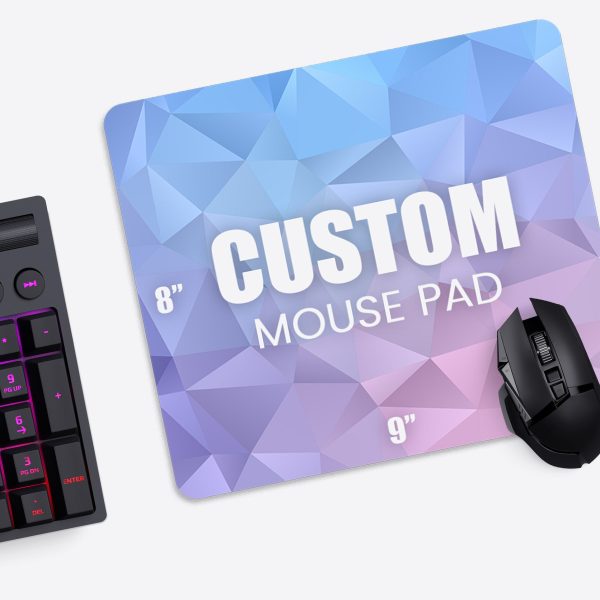
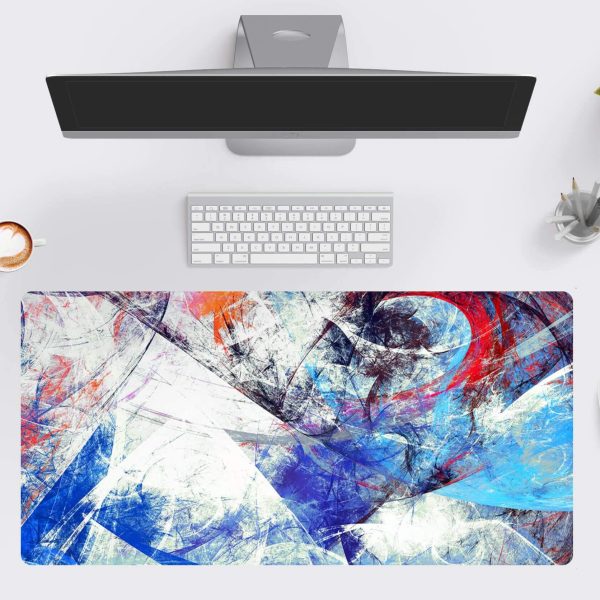
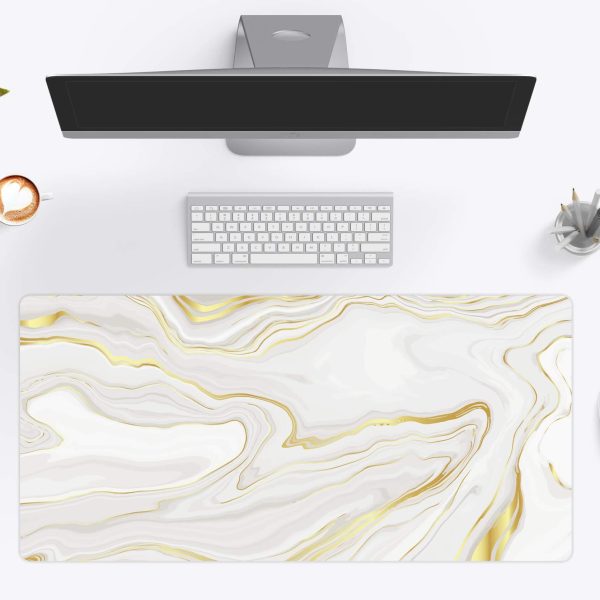
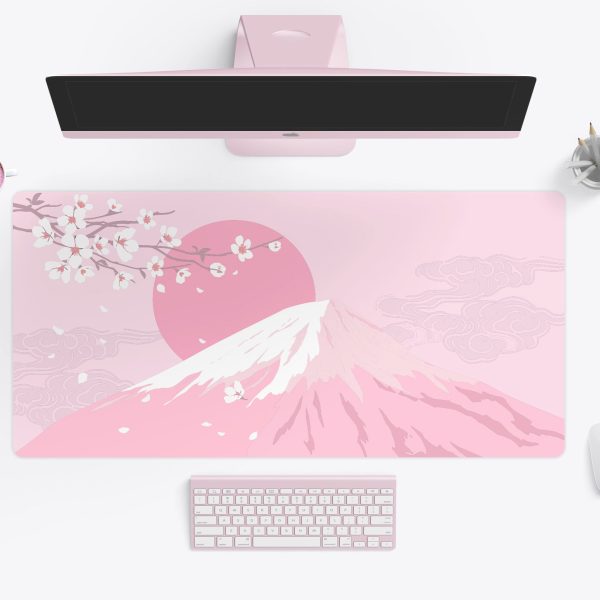

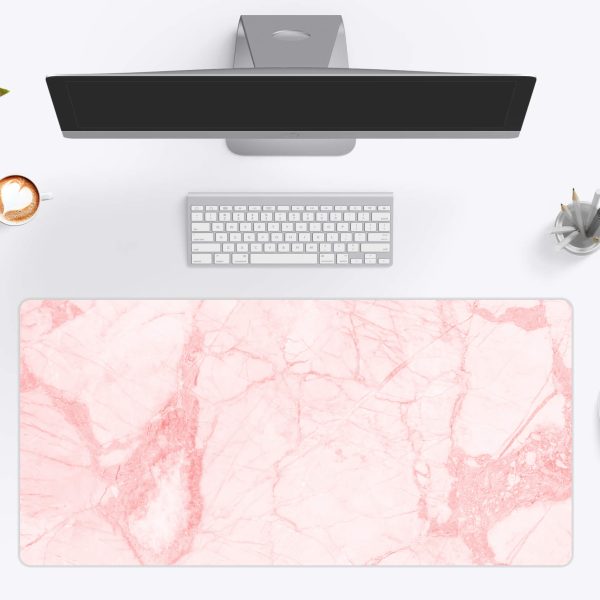
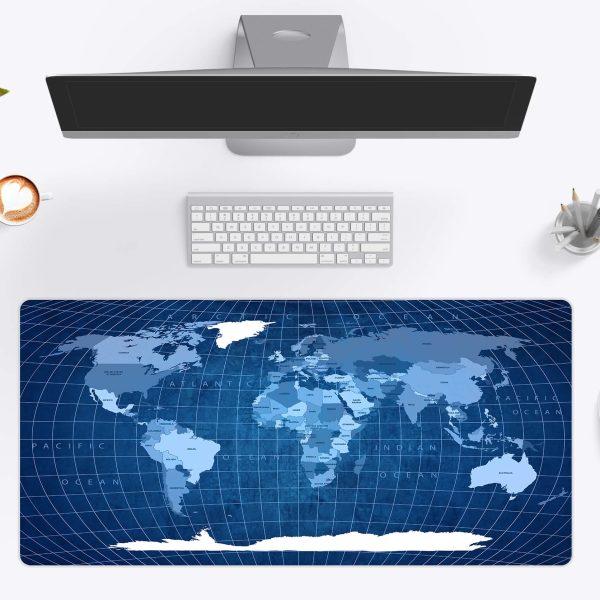
Desk Mat Materials: Cloth, Rubber, Leather, Stitched or Seamless
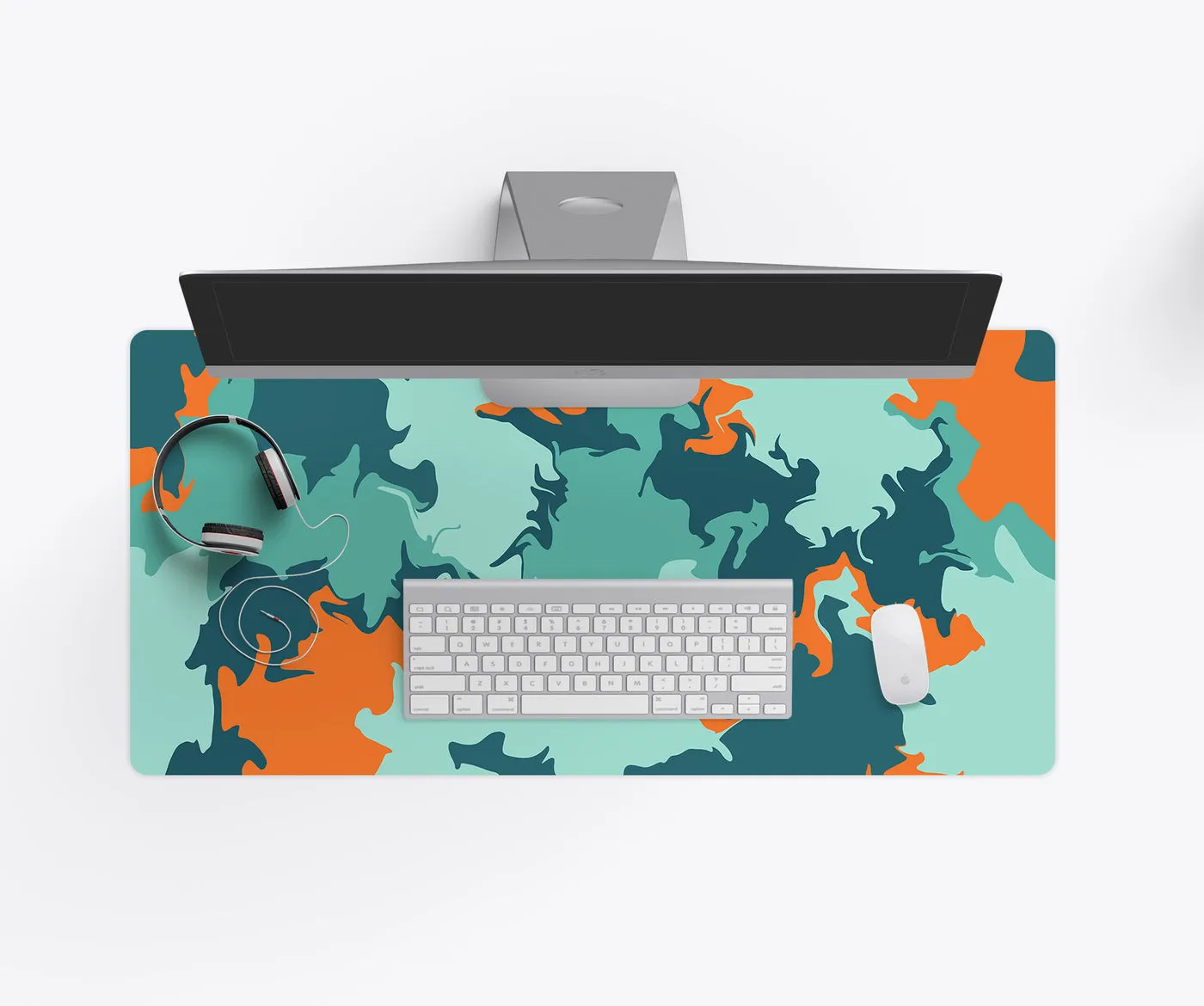
Two desk mats can look identical in a photo and feel completely different on a desk. Here is what each part does.
The top: cloth
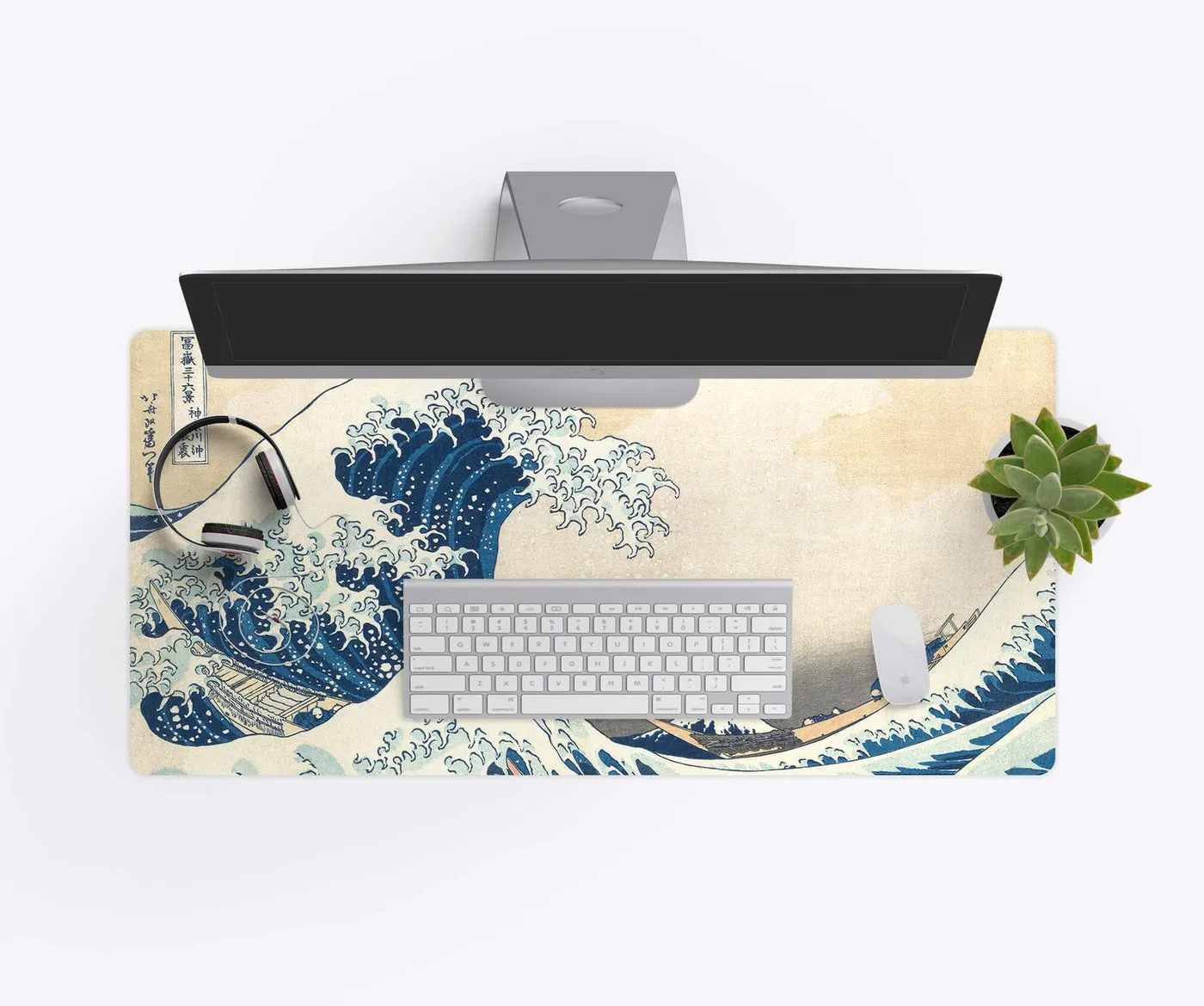
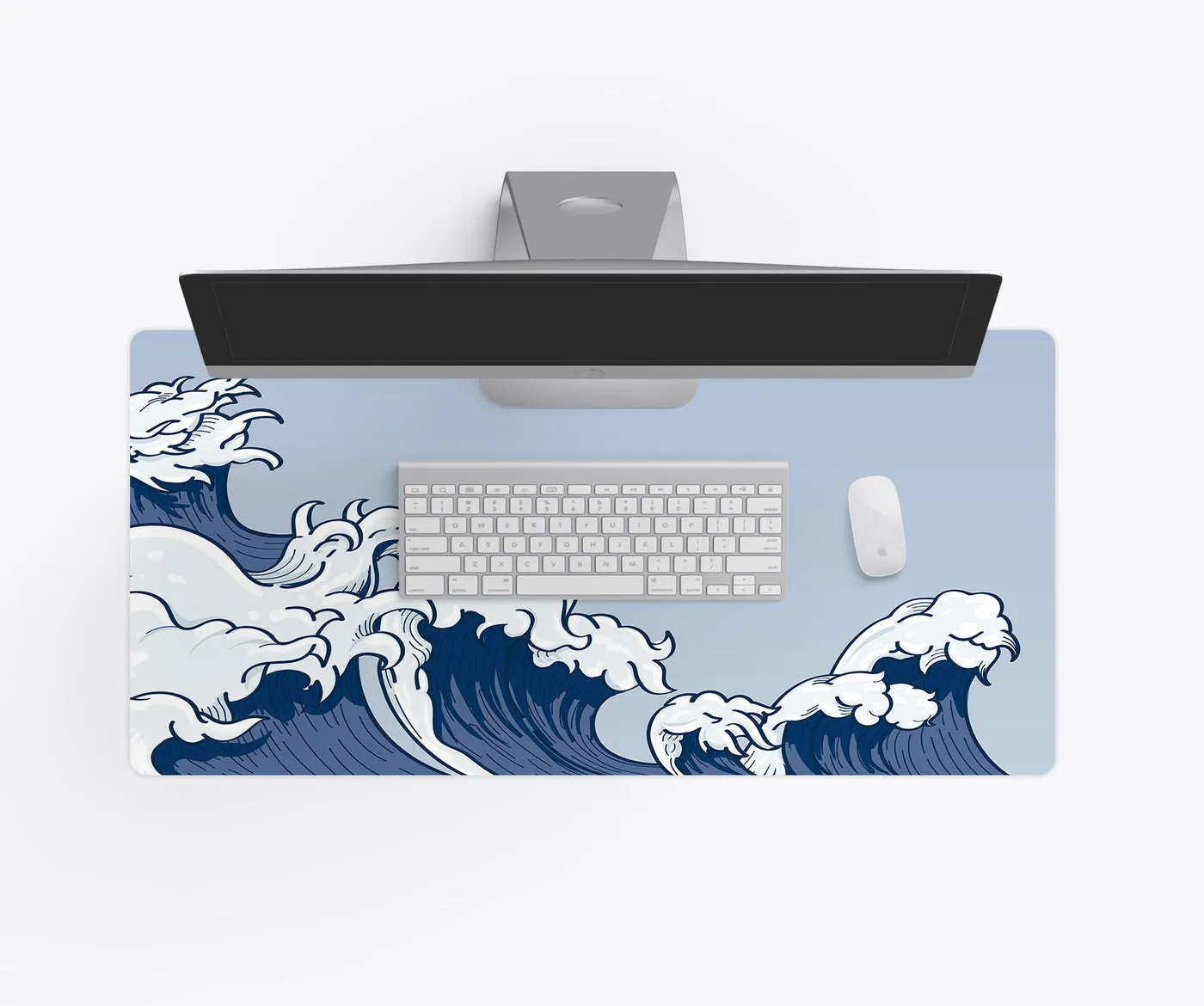
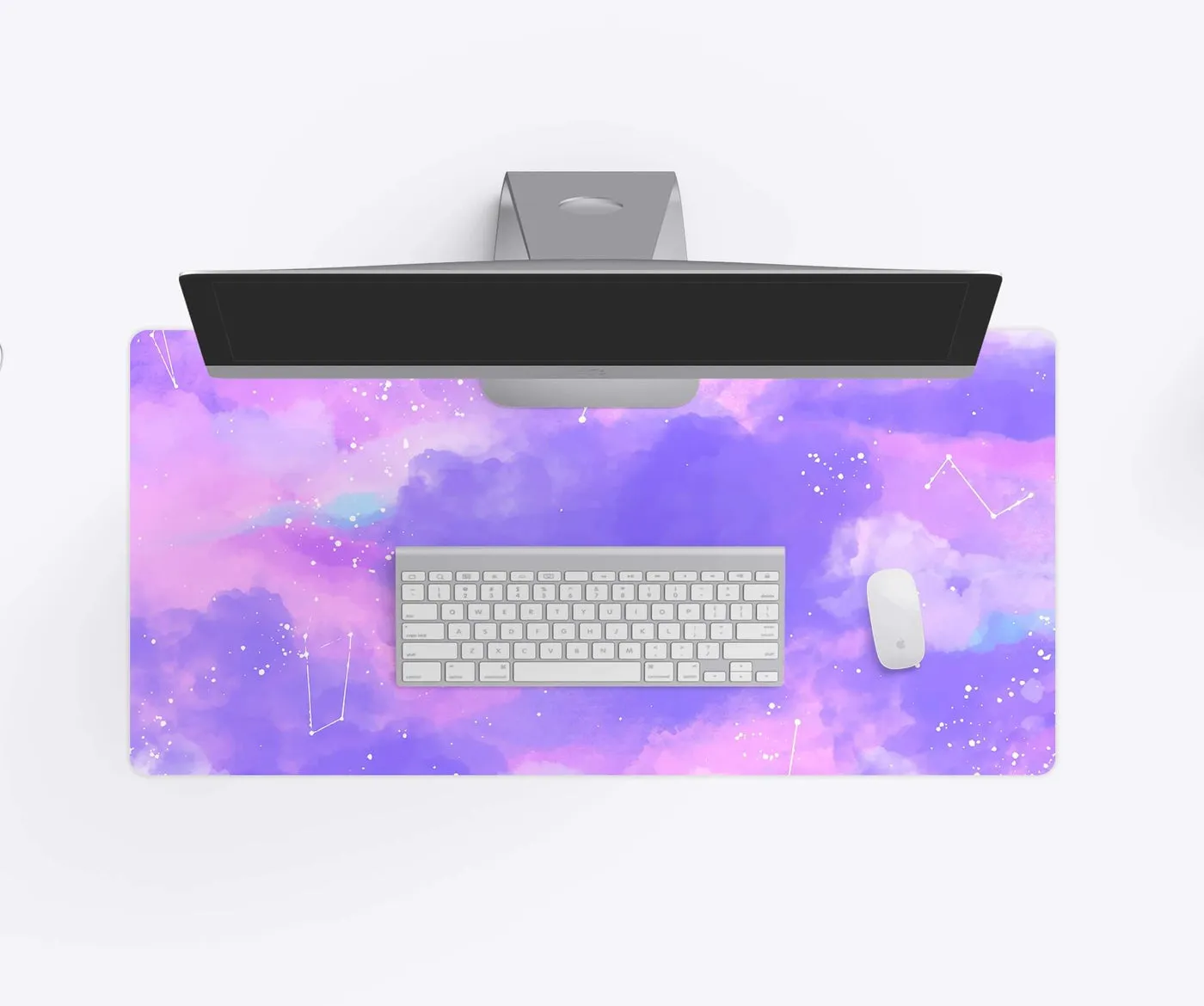
Our printed mats use a smooth micro-weave polyester cloth. Polyester is what makes full-color sublimation possible (more below), and a tight weave gives a mouse a consistent glide with optical and laser sensors.
The base: natural rubber
A 3 mm natural rubber base grips the desk without adhesive, cushions your wrists and dampens keyboard noise. Thicker is not always better: much thicker mats can make a keyboard feel wobbly.
How the print works: sublimation
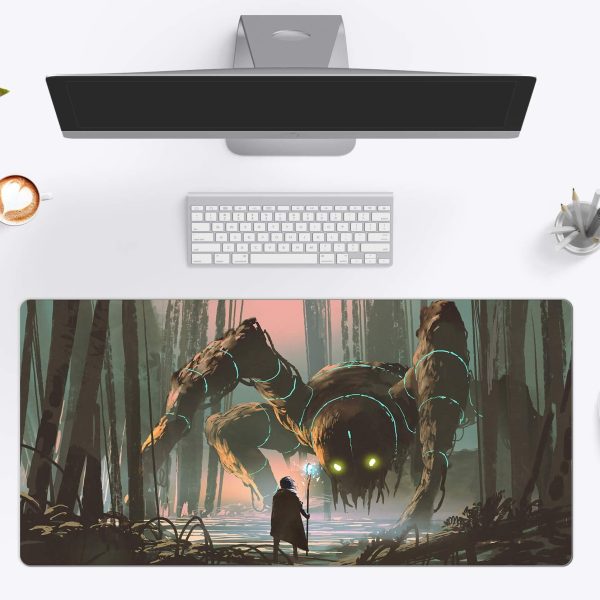
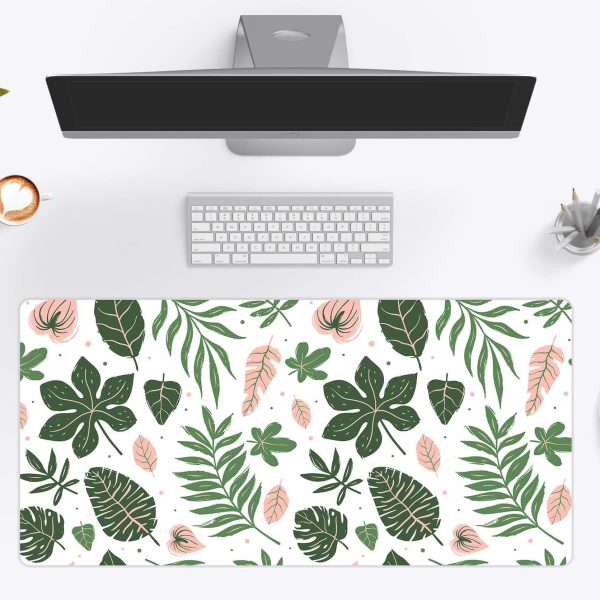
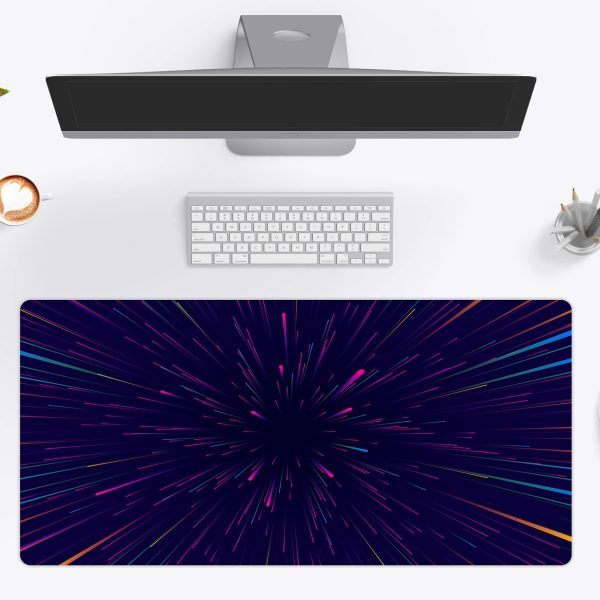
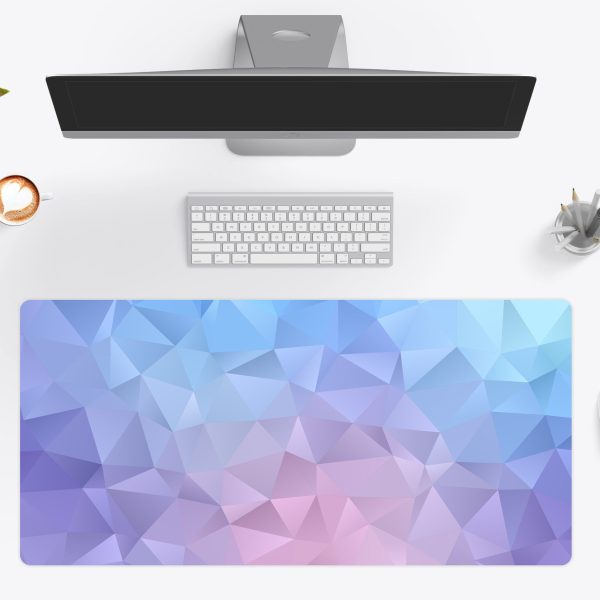
Sublimation ink turns to gas under heat and pressure and bonds into the polyester fibers. The print becomes part of the fabric, so it doesn’t crack, peel or rub off, and it survives washing.
Stitched or seamless edges
Stitched edges add a black border sewn around the perimeter. They give a finished, framed look and even more fray resistance, which is why they are a favorite for gaming pads and playmats that get rolled often. Seamless edges have no border, so the print runs right to the edge for a cleaner look in setup photos. Same top, same base, same print either way.
Leather
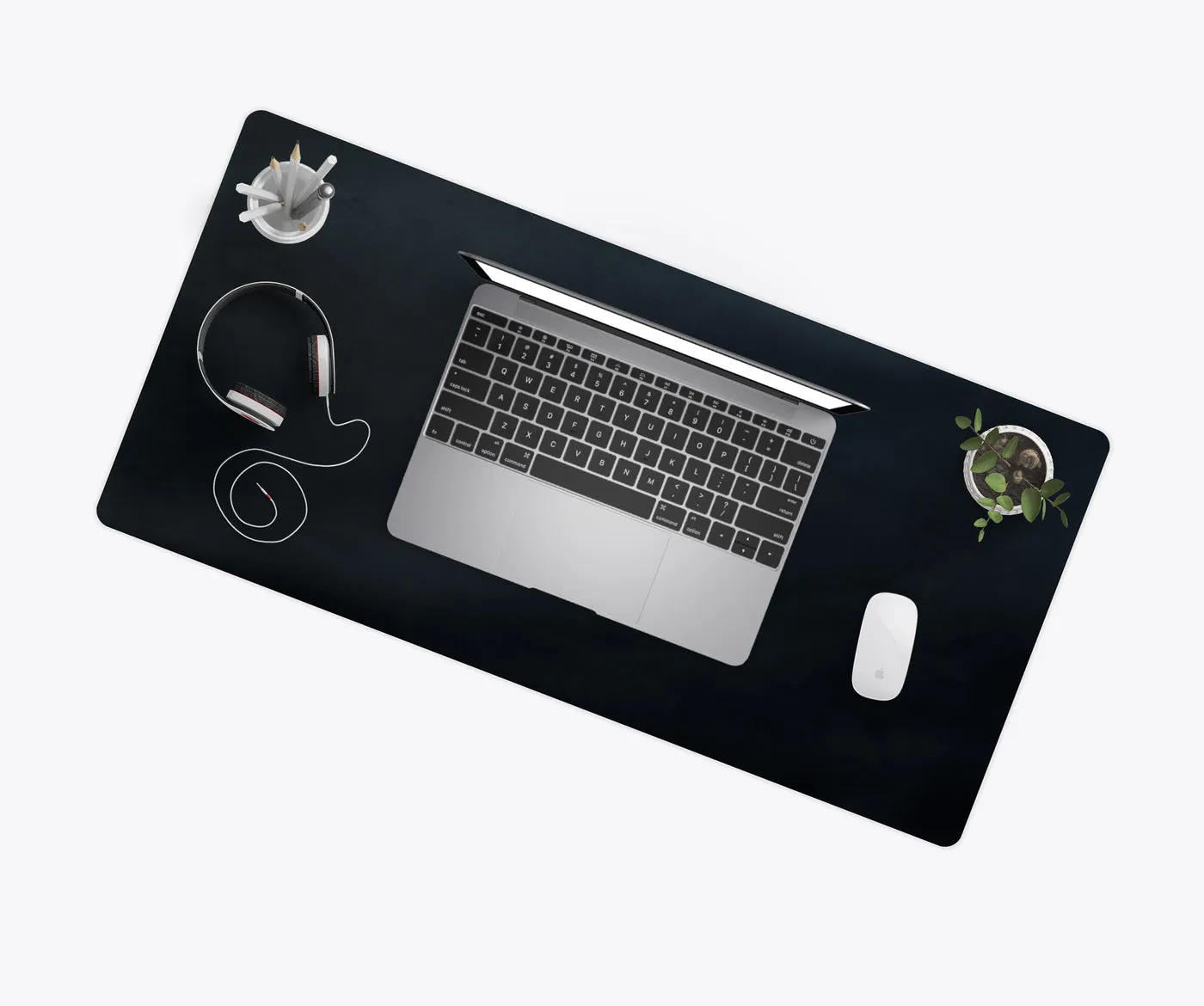
Leather desk mats are a different product: genuine leather in black or tan, personalized by branding a logo or monogram into the surface rather than printing. Leather wears in and develops character over years. It cannot carry a full-color photo.
Gel and wrist rests
Gel pads add a cushioned wrist support under the heel of your hand. A matching 18×4 keyboard wrist rest does the same for typing.
Which should you choose?
- Photo, art or gaming wallpaper: cloth, stitched or seamless.
- Executive desk or corporate gift: leather.
- Long hours with wrist strain: add a gel pad or wrist rest. See the ergonomic setup guide.